A review of 5 popular Data & AI books for data leaders, AI strategists and governance professionals
Grip on data. Trust in AI.
Selected books
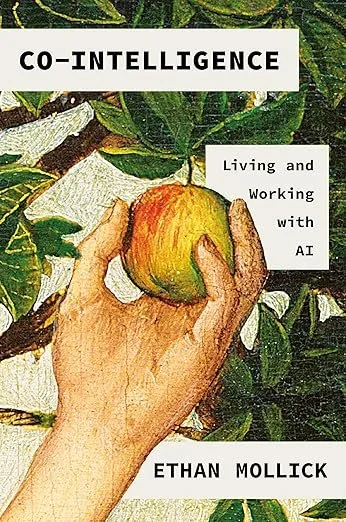
01 Co-Intelligence: Living and Working with AI — Ethan Mollick
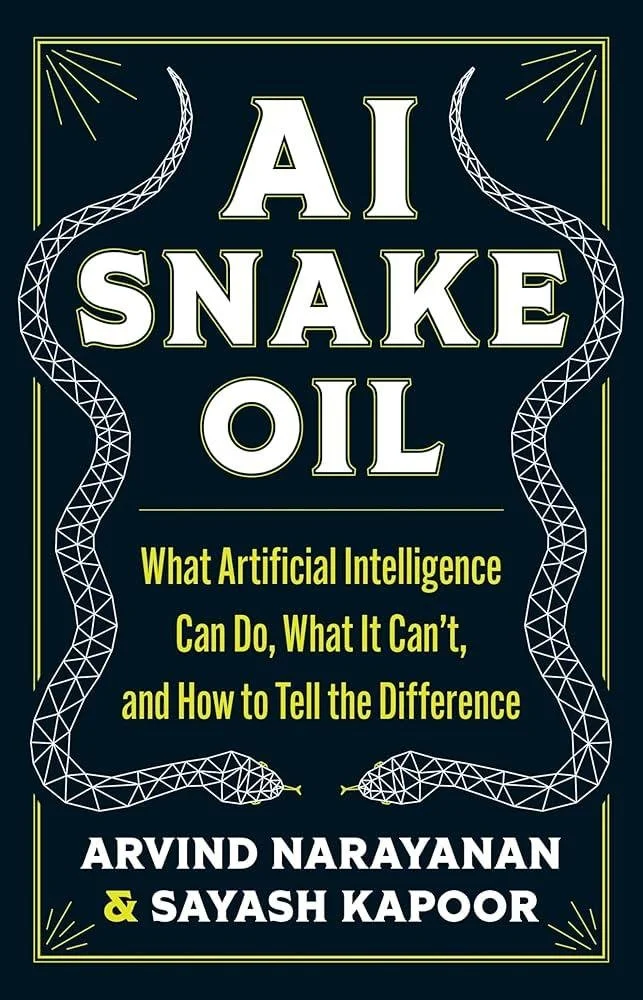
02 AI Snake Oil: What Artificial Intelligence Can Do, What It Can’t, and How to Tell the Difference — Arvind Narayanan and Sayash Kapoor
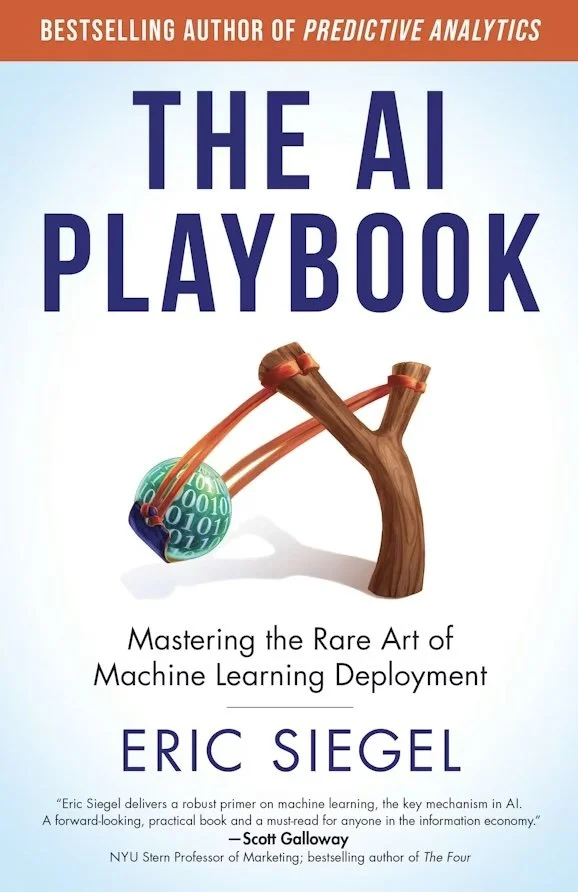
03 The AI Playbook: Mastering the Rare Art of Machine Learning Deployment — Eric Siegel
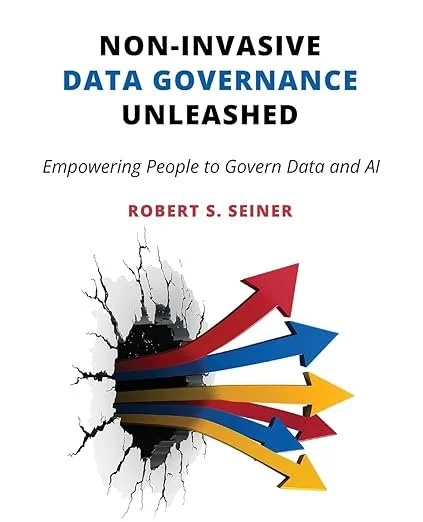
04 Non-Invasive Data Governance Unleashed: Empowering People to Govern Data and AI — Robert S. Seiner
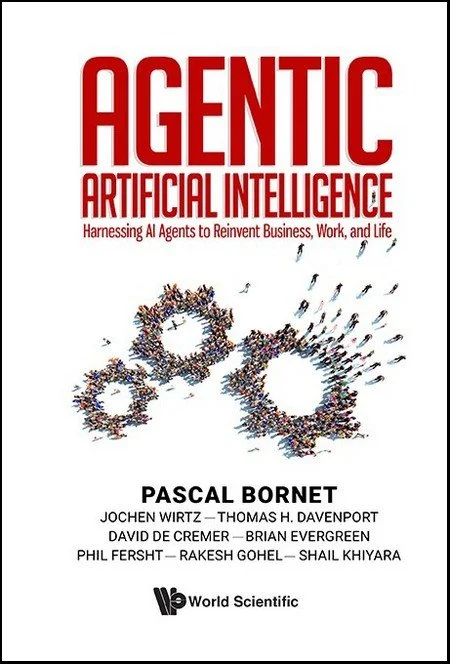
05 Agentic Artificial Intelligence: Harnessing AI Agents to Reinvent Business, Work, and Life — Pascal Bornet and Jochen Wirtz
May 2026
Selection note
This is a curated professional top 5, not a mechanical ranking by sales volume. I selected the books from the perspective of a data and AI leader who needs to help organisations move from AI ambition to operational reality.
The selection balances five necessary lenses: human adoption, critical thinking about AI claims, deployment discipline, data governance and the emergence of agentic AI. Together, these books cover the practical agenda that many organisations now face: how to use AI, how to govern it, how to turn it into measurable value, and how to prepare for the next wave.
A book was included only when it was recent enough to reflect the current AI era, credible enough to be recommended to professionals, and useful enough to support conversations with executives, data teams and governance stakeholders.
How to use this reading list
For leadership teams: start with Co-Intelligence and The AI Playbook.
For governance and risk discussions: combine AI Snake Oil with Non-Invasive Data Governance Unleashed.
For strategic innovation sessions: use Agentic Artificial Intelligence to discuss autonomous workflows and operating-model impact.
For training programmes: use the five books as a structured curriculum: literacy, scepticism, deployment, governance and agents.
01 Co-Intelligence: Living and Working with AI
Ethan Mollick
PUBLICATION Portfolio / Random House, 2024 | 256 pages | ISBN 9780593716717
BEST FOR Executives, data leaders, educators, consultants and professionals who need to use generative AI responsibly in daily work.
MY VERDICT The most accessible and immediately useful book on working with generative AI as a thinking partner - without losing the human role.
WHY I CHOSE IT I chose this book because it translates the generative AI revolution into practical behaviour. It is not primarily about models, architecture or regulation; it is about how knowledge workers should work differently now that AI can write, reason, summarize, critique and coach. That makes it highly relevant for data and AI leaders who need to move colleagues beyond curiosity and fear into productive experimentation.
REVIEW Mollick’s central contribution is the idea of AI as a form of co-intelligence. He avoids two traps that dominate many AI discussions: blind optimism and defensive scepticism. Instead, he treats AI as a powerful but unreliable collaborator that should be invited into the work, challenged, directed and verified. For my audience, that is precisely the right framing. Sustainable AI adoption is not created by buying tools; it is created by changing routines, decision-making, literacy and accountability. The book helps readers understand that prompt quality is only part of the story. The deeper issue is whether professionals know when to delegate, when to supervise and when to remain the human in the room.
WHAT IS STRONG The strongest element is the book’s practicality. Mollick writes clearly, uses recognizable examples, and gives readers permission to experiment. He makes AI approachable without reducing it to a toy. I also like that he emphasises human judgement. This aligns well with a data governance perspective: AI can accelerate work, but it does not remove the need for ownership, context, quality control and ethical judgement.
WHAT IS LESS STRONG The weaker side is that the book moves quickly across many domains. Readers looking for detailed operating models, data architecture, governance frameworks or implementation roadmaps will need additional material. The book is also tied to a very fast-moving technology wave, so some examples will age faster than the underlying principles.
WHY IT IS POPULAR The book became popular because it arrived at exactly the right moment: organisations were already experimenting with ChatGPT, but leaders lacked a calm, usable language for what was happening. It is also popular because it is optimistic without being naive. That tone is rare and valuable.
PRACTICAL TAKEAWAY Use this book as an adoption accelerator. Pair it with hands-on workshops, governance guardrails and use-case selection. It helps teams develop the behavioural foundation for AI: curiosity, verification, transparency and disciplined collaboration between humans and machines.
Reference: publisher / book information
02 AI Snake Oil: What Artificial Intelligence Can Do, What It Can’t, and How to Tell the Difference
Arvind Narayanan and Sayash Kapoor
PUBLICATION Princeton University Press, 2024 | 360 pages | ISBN 9780691249131
BEST FOR Leaders, policy makers, auditors, risk professionals and data teams who must separate real AI value from exaggerated claims.
MY VERDICT A necessary counterweight to AI hype and one of the best books for building a more mature, evidence-based AI conversation.
WHY I CHOSE IT I chose this book because AI adoption needs ambition and scepticism at the same time. Many organisations are under pressure to “do something with AI”, but too few ask whether the claimed use case is technically plausible, ethically defensible, measurable and operationally sustainable. This book provides the critical vocabulary that every data and AI leader needs.
REVIEW Narayanan and Kapoor are not anti-AI. That is important. Their argument is more nuanced: some forms of AI are genuinely powerful, while other products are sold with promises that the technology cannot realistically fulfil. The book is especially useful because it distinguishes between categories of AI rather than treating the field as one monolithic thing. Predictive AI, generative AI and content moderation do not have the same strengths, risks or evidence base. That distinction is highly relevant for governance. Too many AI strategies fail because they assume that success in one category implies success in another. This book pushes readers to ask sharper questions: What is the model actually predicting? What evidence supports the claim? What is the cost of being wrong? Who benefits if the system is deployed? Who carries the risk?
WHAT IS STRONG The strongest aspect is intellectual discipline. The book helps leaders resist vendor language, inflated demos and magical thinking. It is particularly strong for organisations in regulated sectors, where model risk, explainability, bias, accountability and auditability matter. It also connects technical limitations with institutional incentives, showing why bad AI claims spread so easily.
WHAT IS LESS STRONG The limitation is tone and emphasis. Readers who are looking for an energising transformation playbook may experience the book as cautious, even sobering. It is less useful as a roadmap for building AI capabilities and more useful as a diagnostic lens. That is not a weakness in substance, but it does mean the book should be paired with more implementation-oriented reading.
WHY IT IS POPULAR Its popularity reflects the fatigue that many professionals feel with AI hype. After the first wave of enthusiasm, organisations began to ask harder questions about value, risk and accountability. This book meets that need. It gives serious people a serious way to be critical without becoming cynical.
PRACTICAL TAKEAWAY Use this book in AI governance, risk and portfolio discussions. It is ideal for challenging use cases before investment decisions are made. The practical lesson is simple: trusted AI starts with evidence, not enthusiasm.
Reference: publisher / book information
03 The AI Playbook: Mastering the Rare Art of Machine Learning Deployment
Eric Siegel
PUBLICATION The MIT Press, 2024 | 256 pages | ISBN 9780262048903
BEST FOR Business leaders, analytics managers, data scientists and transformation teams who need to turn machine learning into deployed value.
MY VERDICT A pragmatic bridge between analytics ambition and operational deployment - especially strong on why AI projects fail before they create business value.
WHY I CHOSE IT I chose this book because the real bottleneck in AI is often not the model. It is deployment, adoption, decision design and business ownership. Many organisations have pilots, proof-of-concepts and dashboards; far fewer have AI-driven processes that reliably improve outcomes. This book addresses that gap directly.
REVIEW Siegel’s focus is machine learning deployment, not generative AI glamour. That makes the book particularly useful. In the current AI debate, it is easy to forget that most enterprise value still depends on disciplined use of data, prediction, decisioning and operational change. The book argues that machine learning must be treated as a business practice, not merely as a technical project. For a data management audience, that message is essential. A model that is not embedded into a process remains an experiment. A prediction that is not connected to a decision remains an academic exercise. And a business case without measurable outcome discipline becomes theatre.
WHAT IS STRONG The strongest element is the emphasis on deployment as a managerial discipline. Siegel explains the connection between prediction, decisions and measurable business improvement. He also makes clear that successful AI requires cooperation between business professionals and data professionals. That is exactly where many organisations struggle. Data teams may understand the model; business teams own the process; governance teams manage risk; IT controls production. The book helps connect those perspectives.
WHAT IS LESS STRONG The book is less focused on generative AI, agentic AI or the latest LLM architecture. Readers expecting a ChatGPT-era handbook may initially find that surprising. However, that is also why the book has lasting value. Another limitation is that it does not go deeply into data governance, data quality or metadata practices, even though these are prerequisites for reliable deployment.
WHY IT IS POPULAR Its popularity comes from a painful reality: many AI initiatives fail to move from experimentation to production. The book gives leaders a language for that failure and a structured way to avoid it. It speaks to the executive frustration of “we invested in AI, but where is the value?”
PRACTICAL TAKEAWAY Use this book when selecting and managing AI use cases. It reinforces a principle I would always apply: start with the decision and the measurable outcome, then work backwards to the data, model, process and governance required.
Reference: publisher / book information
04 Non-Invasive Data Governance Unleashed: Empowering People to Govern Data and AI
Robert S. Seiner
PUBLICATION Technics Publications, 2025 | 344 pages | ISBN 9781634625937
BEST FOR CDOs, data governance leads, data stewards, enterprise architects and AI programme managers who need practical governance that people will actually adopt.
MY VERDICT A highly relevant data governance book for the AI era because it treats governance as behaviour, accountability and enablement - not bureaucracy.
WHY I CHOSE IT I chose this book because AI has made data governance urgent again. Many organisations now discover that they cannot scale AI responsibly because definitions are unclear, ownership is fragmented, lineage is weak and quality issues are invisible. Seiner’s non-invasive approach is valuable because it starts from existing responsibilities and behaviours rather than from abstract governance structures.
REVIEW The book’s core message is close to my own view: governance must be embedded in the way work is done. It should not become a separate control tower that slows everyone down. For AI, this is crucial. If governance is perceived as bureaucracy, people will bypass it. If it is built into roles, workflows, decisions and tooling, it becomes an accelerator. Seiner’s approach helps organisations move from “we need a governance framework” to “we need people to take recognised responsibility for the data they define, produce and use.” That shift is fundamental. AI does not create trust by itself. Trust comes from data ownership, clarity of meaning, traceability, quality controls, decision rights and escalation paths.
WHAT IS STRONG The strongest aspect is the people-centric approach. The book recognises that governance succeeds through adoption, not through policy documents alone. It also speaks directly to modern AI pressure by connecting governance to data and AI readiness. That makes it useful for organisations that are building AI capabilities while still maturing their data foundations.
WHAT IS LESS STRONG The limitation is that “non-invasive” can be misunderstood. In practice, serious governance always changes behaviour, priorities and sometimes power. Some organisations may need stronger intervention than the phrase suggests. The book is strongest when interpreted as “least disruptive, most embedded governance”, not as governance without change.
WHY IT IS POPULAR Within the data management community, the popularity of this work comes from its realism. Data professionals recognise the failure pattern: too much governance theatre, too little operational ownership. The book offers a practical alternative that fits the current need to make AI trustworthy, explainable and governable.
PRACTICAL TAKEAWAY Use this book as a foundation for AI-ready data governance. It is especially useful for designing stewardship, ownership, data quality routines and governance operating models that support rather than block innovation.
Reference: publisher / book information
05 Agentic Artificial Intelligence: Harnessing AI Agents to Reinvent Business, Work, and Life
Pascal Bornet and Jochen Wirtz
PUBLICATION World Scientific Publishing, 2025 | 572 pages | ISBN 9789819815661
BEST FOR Executives, consultants, innovation teams and data/AI professionals preparing for AI agents, autonomous workflows and new operating models.
MY VERDICT A timely strategic guide to the next wave of AI: from copilots and assistants towards agents that act, coordinate and reshape workflows.
WHY I CHOSE IT I chose this book because agentic AI is the next practical frontier after generative AI adoption. Organisations are moving from “AI helps me write or analyse” to “AI can execute parts of a workflow”. That shift has major implications for process design, governance, risk, data quality and human oversight. This book is therefore highly relevant for any data and AI professional who wants to look beyond prompting.
REVIEW The value of this book is that it frames agentic AI as an organisational and strategic development, not just as another tool category. AI agents combine language models with goals, tools, memory, orchestration and action. That creates new possibilities: automated service flows, intelligent research assistants, operational copilots, sales and marketing agents, and eventually semi-autonomous business processes. But it also creates new risks. An AI assistant that drafts text is one thing; an AI agent that executes tasks across systems is quite another. For me, the governance implication is obvious: as AI becomes more agentic, data management becomes more important, not less. Agents need reliable context, clear permissions, quality data, traceable actions and well-designed human escalation.
WHAT IS STRONG The strongest part is the strategic breadth. The book helps leaders understand why agentic AI matters and why early adopters may build compounding advantages. It also acknowledges the gap between promise and reality, which is essential. Agentic AI should not be sold as magic automation. It requires workflow integration, controls, user adoption, error handling and responsible design.
WHAT IS LESS STRONG The book is broad and ambitious. Readers who need deep technical implementation patterns may want to supplement it with engineering-focused resources. Because the agentic AI field is changing extremely fast, some tool references and market examples will inevitably age. The durable value is in the operating-model and leadership questions.
WHY IT IS POPULAR Its popularity is driven by timing. After the first generative AI wave, leaders are asking what comes next. Agentic AI promises a shift from productivity improvement to workflow redesign. That is why the topic resonates: it connects AI directly to business operations and competitive advantage.
PRACTICAL TAKEAWAY Use this book to start boardroom and management conversations about AI agents. The key question is not “which agent platform should we buy?” but “which workflows are mature, governed and valuable enough to delegate safely?”
Reference: publisher / book information
Another review of this book is also on this blog: https://www.vistaveritas.ai/blogs/boekreview-agentic-artificial-intelligence (in Dutch)
